

Articles

When we talk about mental wellness in Black and Brown communities, we’re often discussing more than individual therapy sessions or medication management. We’re talking about healing that happens within community, within family systems, and with people who truly understand the lived experiences of trauma, systemic oppression, and resilience. That’s exactly what makes our partnership with Village Is Possible so powerful and necessary.
Village Is Possible isn’t just another community support organization: they’re revolutionizing how we approach mental health and healing for some of our most vulnerable families. Their work centers around a truth that resonates deeply with our foundation’s mission: healing happens best when it’s rooted in community, cultural understanding, and genuine peer connection.
Understanding the Village Approach
The name “Village Is Possible” isn’t just catchy: it reflects a fundamental understanding of how healing works in Black and Brown communities. For generations, our communities have known that “it takes a village,” but systems of oppression have often torn apart those very villages that sustained us. Village Is Possible is actively working to rebuild those connections, one family at a time.
Their approach recognizes what trauma specialist Resmaa Menakem teaches: “The body, not the thinking brain, is where we experience most of our pain, pleasure, and joy, and where we process most of what happens to us.” This body-centered, culturally grounded philosophy aligns perfectly with our foundation’s understanding that mental wellness isn’t just about talk therapy: it’s about community care, cultural healing, and addressing the root causes of trauma in our communities.

Peer Support That Actually Gets It
One of the most powerful aspects of Village Is Possible’s work is their emphasis on peer support from people with lived experience. When someone who has navigated the child welfare system sits with a family currently in that system, something magical happens. There’s an immediate understanding, a credibility, and a hope that can’t be replicated by even the most well-meaning professional who hasn’t walked that path.
Their peer supporters have lived through experiences with:
- The child welfare system and family separation
- Sexual abuse, sexual trauma, and sexual exploitation
- Systemic racism and institutional barriers
- The process of rebuilding family connections after trauma
This lived experience creates a foundation of trust that’s essential for healing, especially in communities where mental health systems have historically caused more harm than help. When our people see others who look like them, who’ve faced similar struggles, and who’ve found paths to healing, it transforms what seems possible.
Community Building Beyond Traditional Therapy
While individual therapy has its place, Village Is Possible understands that for many families: particularly families of color: healing happens in community. Their community building support connects people to:
Holistic Providers: Instead of just referring families to traditional mental health services that may not understand their cultural context, they connect people with healers, practitioners, and providers who take a whole-person approach that honors cultural practices and community wisdom.
Village Members for Lifelong Connections: This isn’t about short-term case management. They’re building genuine, lasting connections between families and community members who can provide ongoing support, mentorship, and friendship. These relationships often become chosen family: which is especially crucial for families whose biological family structures have been disrupted by trauma or system involvement.
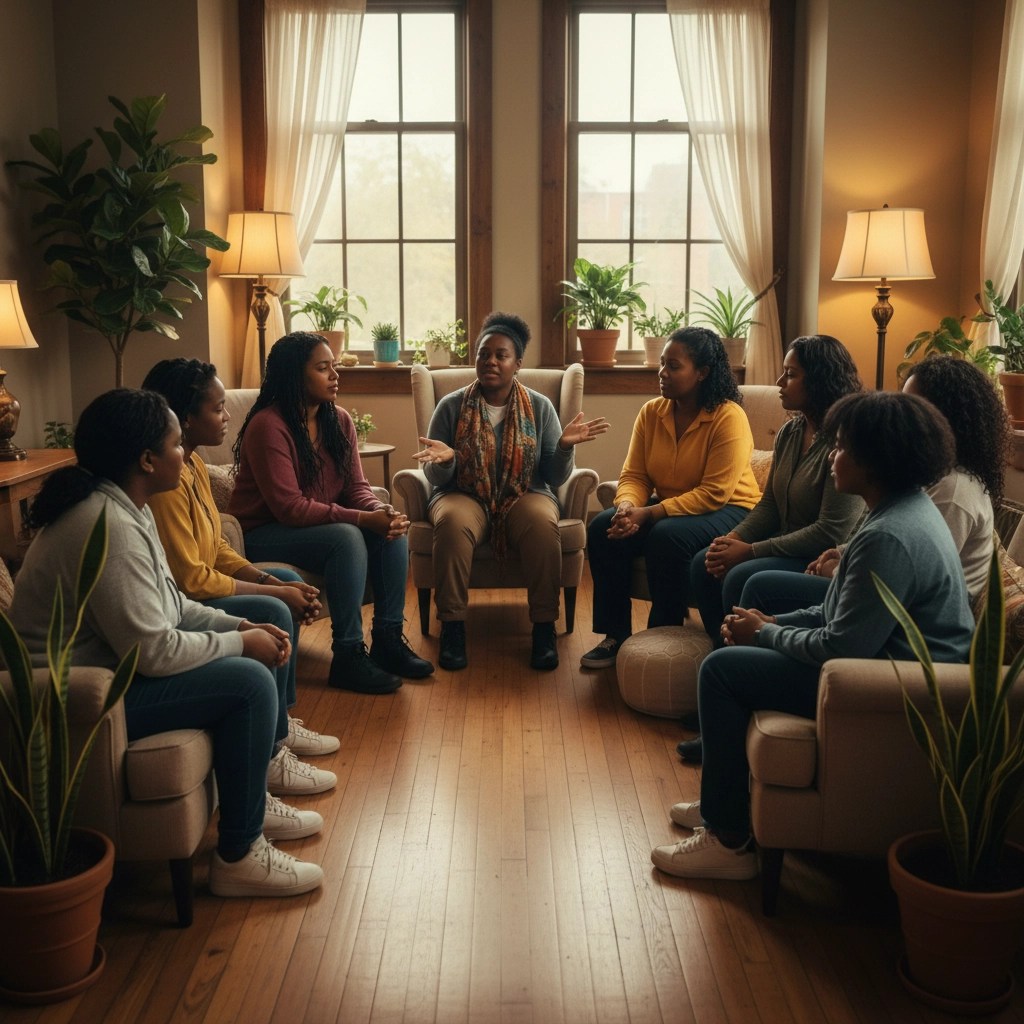
Peer Networks: They create spaces where families can connect with others who’ve faced similar challenges, reducing isolation and building collective resilience.
Family-Centered Healing That Honors Our Values
One of the most culturally relevant aspects of Village Is Possible’s work is their commitment to family-centered healing: and they define “family” broadly to include biological families, chosen families, and community families. This approach recognizes several truths that are especially important in Black and Brown communities:
- Family separation is traumatic, even when necessary for safety
- Healing one person in isolation rarely works when the whole family system has experienced trauma
- Cultural identity and family connection are essential components of mental wellness
- Community care has always been a survival mechanism in our communities
Their family-centered treatment helps work through barriers to healing that affect the whole family unit. This might mean helping a mother process her own childhood trauma while simultaneously supporting her relationship with her children. It might mean bringing together multiple generations to address patterns of trauma and resilience that have been passed down through families.
Addressing Systemic Trauma with Cultural Competence
Village Is Possible doesn’t pretend that individual therapy alone can heal the impacts of systemic racism, poverty, and institutional violence. They understand that many of the mental health challenges in our communities are actually normal responses to abnormal circumstances: responses to living in systems that weren’t designed to support our wellbeing.
Their work particularly focuses on families affected by systems that disproportionately impact Black and Brown communities:
- Human trafficking: Which often preys on young people who lack family support or community connection
- Child welfare involvement: Which removes Black children from their families at much higher rates than white children
- Mass incarceration: Which has devastated families and communities of color for generations
By addressing the systemic nature of these traumas while providing culturally grounded healing spaces, Village Is Possible offers hope that goes beyond individual symptoms to community transformation.

Creating Healing-Centered Spaces of Being
Perhaps most importantly, Village Is Possible creates what they call “healing-centered spaces of BEing”: environments where families can exist, breathe, and heal without constantly being in survival mode. These spaces are designed to allow people to reconnect with identities and cultural practices that may have been stolen or suppressed by systems of oppression.
In these spaces, a young person who was trafficked can rediscover their worth beyond what was done to them. A mother involved with child protective services can access her wisdom and strength as a parent while addressing the challenges that brought system involvement. A family affected by incarceration can maintain and rebuild bonds despite physical separation.
These healing spaces honor the reality that for many Black and Brown families, traditional mental health settings can feel unsafe, culturally irrelevant, or judgmental. Village Is Possible creates alternatives that center community wisdom, cultural practices, and peer support.
The Synergy with Our Foundation’s Mission
The partnership between Village Is Possible and Getting My Cheese Back On My Cracker Foundation represents a powerful synergy in our shared commitment to culturally relevant mental wellness. While our foundation focuses on broader mental health education and destigmatization in Black communities, Village Is Possible provides the deep, intensive, community-based healing work that families most affected by systemic trauma need.
Together, we’re addressing mental wellness from multiple angles:
- Prevention and education through our foundation’s outreach and podcast work
- Intensive healing and support through Village Is Possible’s direct services
- Community building that strengthens the village for everyone
- Cultural relevance that honors our communities’ wisdom and resilience
Moving Forward Together
As we continue to build this partnership, we’re excited about the possibilities for expanding community-based mental health approaches that actually work for our people. Village Is Possible is proving that when we center community wisdom, honor lived experience, and address systemic trauma, healing becomes not just possible but inevitable.
Their work reminds us that the village isn’t just possible: it’s necessary. And when we rebuild those villages with intentionality, cultural grounding, and commitment to justice, we create spaces where everyone can truly get their cheese back on their cracker.
If you or someone you know could benefit from Village Is Possible’s services, or if you’re interested in learning more about community-based approaches to mental wellness, we encourage you to connect with them. Because healing happens best when it happens together, in community, with people who understand the journey because they’ve walked it too.
To learn more about our foundation’s approach to mental wellness and community healing, visit our resources page or tune into our podcast where we regularly discuss culturally relevant approaches to mental health.

